
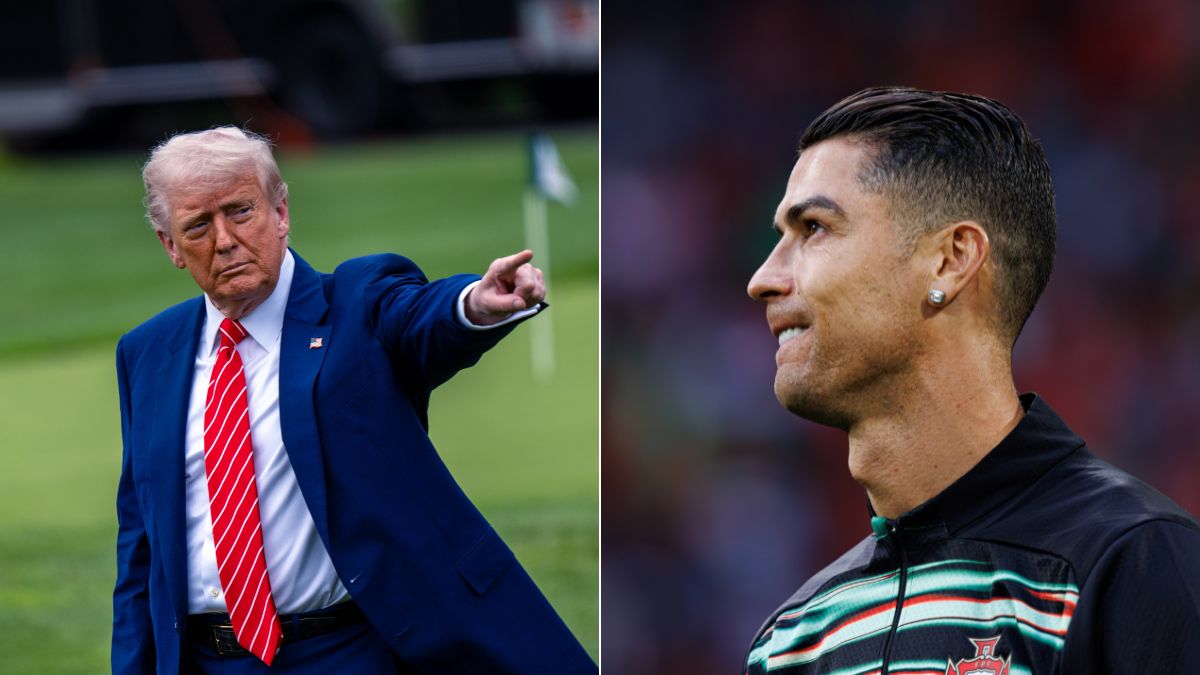
In the gold glow of the White House East Room, Cristiano Ronaldo isn’t taking a penalty or lifting a trophy. He’s standing between Donald Trump and Saudi crown prince Mohammed bin Salman while cameras flash and the White House social team types out a caption designed to break the internet: “Two GOATS. CR7 x 45/47.”
It looks like algorithm bait—a memeable collision of politics and sport. But this isn’t just content. It’s a preview. In one frame: the president of the main 2026 World Cup host, the ruler of the 2034 host, and the player who’s become Saudi Arabia’s most valuable football import. The next decade of the sport, compressed into a single photo op.
Online reaction hit every predictable beat. Ronaldo versus Messi. Trump versus Biden. “Toy of the prince” jokes. Arguments over who skipped which White House event and what that says about relevance. Nobody was debating tactics. They were debating power.
And that’s exactly the point.
Ronaldo’s invitation isn’t random. It’s the logical endpoint of his move to Al Nassr, the Public Investment Fund-backed club that kicked off Saudi Arabia’s football revolution. His goals still matter, but his presence at the president’s side—that’s the real return on investment. He’s not just playing in Saudi Arabia. He’s selling it.
For bin Salman, this dinner checks multiple boxes. Civilian charm offensive. World Cup launch event. Global PR reset. Saudi Arabia won the 2034 hosting rights unopposed—nobody else even bid—and now they’re building fifteen stadiums across five cities, from Riyadh to that mirrored mega-city in NEOM. Human rights groups have warned that the construction rush will endanger migrant workers and deepen accusations of sportswashing. But that’s the uncomfortable part nobody wants to dwell on during a state dinner.
The United States, meanwhile, is barreling toward a very different World Cup. In 2026 the tournament expands to 48 teams and 104 matches across sixteen cities in the U.S., Mexico, and Canada. Trump has wrapped himself around that event like shrink wrap—Oval Office photo ops with Gianni Infantino, threats to move games away from cities he calls “dangerous,” talk of presidential control over host cities and visas.
He recently announced the World Cup draw will happen in Washington, framing it as both a global showcase and a flex of American power. In his version, the tournament proves America is open for business—on its terms.
Saudi Arabia’s pitch is different but equally controlled. Officials promise a modern, festival-style World Cup while insisting long-standing rules on alcohol and public behavior stay in place. No beer in or around stadiums. No quiet carve-outs for visiting fans. Take it or leave it.
At the same time, the bid leans hard into spectacle. Reworked venues in Jeddah and Al Khobar. Eye-popping concepts like a stadium suspended inside NEOM’s mirrored megastructure—literally a stadium in the sky.
The White House dinner, then, becomes more than a quirky crossover. It’s the unofficial first summit of the two World Cups that will define the next decade. And Ronaldo is the connector. He’s contracted in Saudi Arabia through 2027, long enough to anchor the domestic league while the country builds toward 2034. He’s still central enough to Portugal that he may yet walk out in North America in 2026. One man, two tournaments, perfectly positioned.
The other storylines weave into the same image. Messi’s absence from his own White House moment—when he received the Presidential Medal of Freedom but skipped the ceremony over scheduling conflicts—now sits in sharp contrast to Ronaldo’s enthusiastic appearance alongside a different president. One lent his name to an honor. The other lent his face to a geopolitical photo op.
Then there’s the question of who’s using whom. Trump gains global star power and sends a signal to younger voters who care more about football than party platforms. Bin Salman gains a visual endorsement inside the building that once sanctioned him over Jamal Khashoggi’s murder. Ronaldo gains proximity to power in the country that will host his likely final World Cup, while reinforcing his status as the face of Saudi football.
Everyone gets something. That’s how these arrangements work.
Critics will say the clip is a perfect distillation of everything uncomfortable about modern football. A tournament in a North America wrestling with immigration bans and “dangerous city” rhetoric. A follow-up World Cup in a kingdom whose stadium boom sits on fragile labor protections. A superstar who long ago became a walking sovereign wealth fund, paid to draw attention away from harder questions.
They’re not wrong.
But here’s the thing: this is what global football looks like now. The sport goes where the money, infrastructure, and political will exist. If that means Ronaldo walking through the White House with one of his most powerful employers while a future host looks on, the game is only reflecting the world that built it. Uncomfortable? Sure. Surprising? Not even a little.
The dinner will age differently from most viral clips. In 2026 the same White House hosts the World Cup draw and welcomes the flood of fans that come with it. Eight years later, when the trophy is lifted under Saudi lights, replaying the night Trump, bin Salman, and Ronaldo shared a room won’t feel like entertainment. It’ll feel like foreshadowing.
Because that’s precisely what it was.
