
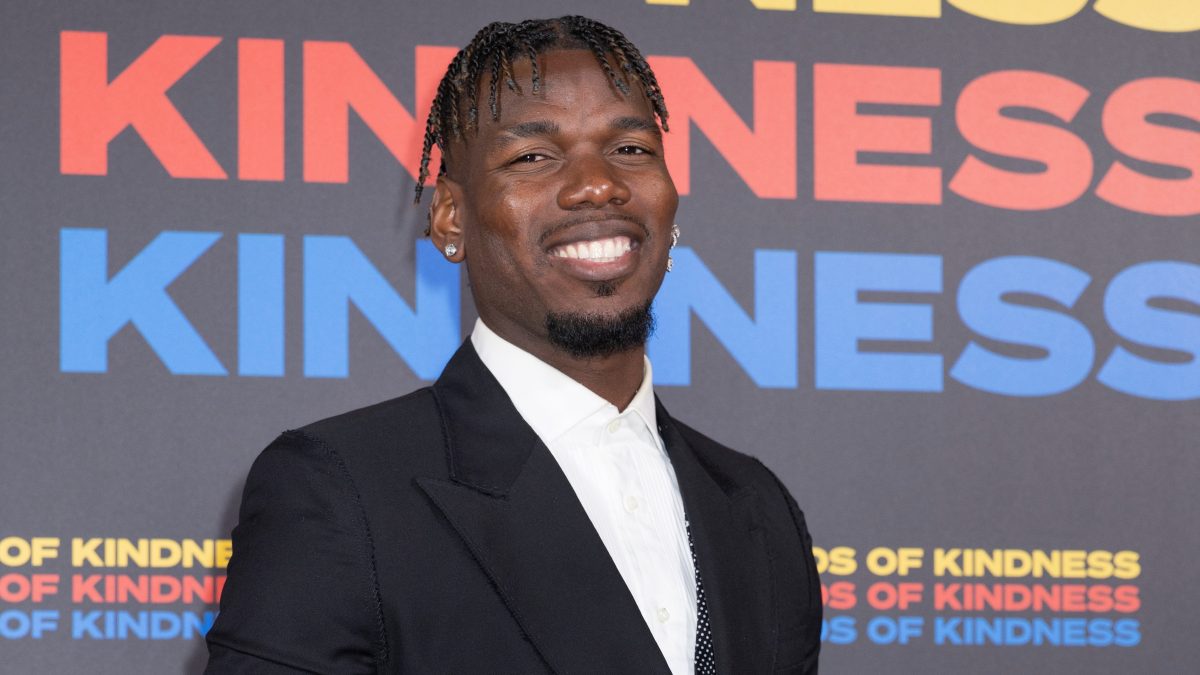
Paul Pogba’s next act is unfolding in two very different arenas. In Ligue 1, the 32-year-old midfielder is trying to restart his career with Monaco after an 18 month doping ban. In Saudi Arabia, he has bought into Al Haboob, a camel racing team that describes itself as the world’s first professional outfit in the sport.
Pogba signed a two year contract with Monaco in June 2025 after the Court of Arbitration for Sport cut his suspension from four years to 18 months, following a positive test for the hormone DHEA while at Juventus. The ruling allowed him to play again in 2025, more than two years after his last competitive game, and reopened a career that once carried a world record transfer fee.
Even as he worked toward that return, he was searching for a project beyond soccer. Al Haboob, founded in 2021 by Saudi entrepreneurs Omar Almaeena and Safwan Modir, offered one. Built on their RedSea Camel Company breeding operation, the team races across Saudi Arabia and the wider Gulf and is positioned as the foundation for a future Camel Racing League.
Pogba’s involvement goes well beyond a ceremonial title. As both shareholder and ambassador he is expected to help shape Al Haboob’s media strategy, commercial partnerships and community programs, drawing on his experience at some of Europe’s biggest clubs. At the launch he set out the basic emotion behind the move, saying, “I am incredibly excited to be joining forces with Al Haboob.”
He has framed the project as part of how he now chooses his work. “I look for unique, exciting opportunities that challenge me and allow me to grow,” he said in a separate statement. The former Manchester United midfielder also allowed himself a nod to his old transfer record, adding: “Owning the world’s most expensive camel one day would be a beautiful full-circle moment – something fun, something meaningful and something that excites me.”
A desert sport reaching outward
Camel racing has long been woven into life on the Arabian Peninsula, with major festivals in Saudi Arabia, Qatar and the United Arab Emirates. In the last two decades the sport has been reshaped by technology, regulation and money. Lightweight robot jockeys, controlled from cars that run alongside the track, have replaced child riders after sustained human rights pressure, and prize funds at elite meetings now stretch into the millions of dollars, including roughly $6.4 million at the most recent AlUla Camel Cup. Top racing camels can sell for seven figure sums.
Almaeena and Modir have tried to sit where heritage, entrepreneurship and media meet. RedSea Camel Company sells carefully bred Mizayeen camels as long term assets, marketed with promised returns and professional care. Their production arm, Fatha Productions, created the Netflix series Camel Quest, which followed their attempt to break into one of Saudi Arabia’s most prestigious camel festivals. Al Haboob is the sporting centerpiece of that wider ecosystem.
The project also fits neatly into Saudi Arabia’s wider effort to make sport a pillar of its Vision 2030 economic plan. In recent years the country has invested heavily in soccer, golf, boxing and motorsport. Camel racing adds a layer of cultural symbolism, turning a centuries old desert pursuit into a made for streaming product aimed at sponsors and international broadcasters. Bringing in a World Cup winner with name recognition in Europe, Africa and Asia is another way of signaling that ambition.
For Pogba, the timing is revealing. His ban for DHEA, announced in 2024, initially looked like the final break in a career that had already been shaped by injuries and by a long legal case away from the field. When CAS reduced the suspension to 18 months he greeted the ruling with a simple line, saying, “Finally the nightmare is over.” He then chose Monaco as the place to find rhythm and minutes again, at a distance from the glare that followed his later years at Juventus and Manchester United.
It’s now almost standard for leading players to seek equity stakes or ownership roles while they’re still active rather than waiting for retirement. What makes this venture different is the combination of sport and timing. Pogba isn’t a recently crowned champion signing off with a testimonial season. He’s a 32 year old trying to rescue the closing chapters of his playing career while betting on a niche discipline that wants to become a global circuit.
From Al Haboob’s side, Pogba offers more than marketing reach. A career spent inside some of the most scrutinized soccer clubs in the world gives him a model for how performance departments, commercial teams and community projects can fit together. In 2016, Manchester United treated him as the centerpiece of a record breaking transfer, complete with its own narrative and branding. In Jeddah and at desert tracks across the region, a camel racing startup is now testing the reverse idea, treating a heritage sport as the stage on which a different kind of star can help build something new.
Whether camel racing can move from regional fixture to genuinely global property will depend on infrastructure, regulation and the ability to make its rhythms legible to people who’ve never seen a race. Pogba’s decision to tie part of his future to that question is a reminder of how second acts in soccer are changing. The midfielder who once reset the transfer market is now helping to see whether a centuries old desert race can become one of the game’s next frontiers.
