
Football hands out its “best player” trophy twice a year. Three times if you count whatever UEFA’s doing with the men’s player award, which, honestly, we’re not sure anyone does.
FIFA runs The Best. France Football runs the Ballon d’Or (with UEFA now, it’s complicated). And every year, people lose their minds when the results don’t line up. Why would they line up? These aren’t the same award.
Here’s the thing nobody wants to sit with: when they do agree, that’s the weird outcome. Two totally different systems, different voters, different calendars—landing on the same guy is the coincidence, not the expectation. Or is it?
The differences that actually matter
Okay so. Who runs what.
Ballon d’Or is France Football’s baby. International press jury, one journalist per country from the top FIFA-ranked nations. Very “we asked the experts” energy. The Best is FIFA saying “no wait we want our own thing” and pulling in coaches, team captains, fans, and media. Four groups, weighted equally, way messier.
The calendar thing is underrated. For 2025, Ballon d’Or counted performances from August 1, 2024 through mid-July. The Best started ten days later and ran a few weeks longer. You’re thinking “ten days, who cares.” But if a player’s whole argument is a hot start to the season, or a late Champions League run—yeah, that window matters. The cutoff decides whose peak counts.
Voting works differently too. Ballon d’Or gives each journalist a top-ten ranking, points 15 down to 1, clean math. The Best does this four-way split thing where coaches, captains, fans, and media all get equal weight. Same players, completely different aggregation.
And honestly, the criteria diverge in ways that are hard to pin down. Ballon d’Or officially cares about individual performance, then team achievements, then “class and fair play”—whatever that means. (We’ve never seen anyone lose a Ballon d’Or for lack of class, so.) The Best sprawls out into goalkeeper of the year, goal of the year, best XI. More categories, more room for interpretation, more ways to slice a season.
What’s happened recently
Look at the last three years side by side, and this all makes more sense.
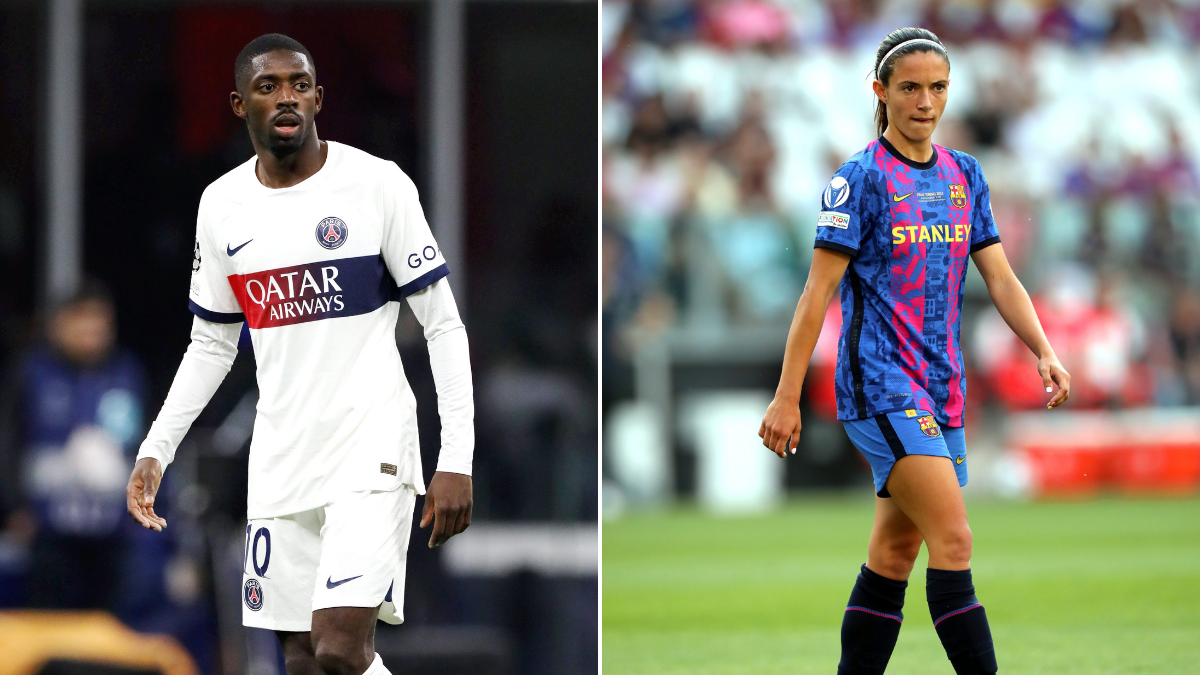
2025: Dembélé won both. Bonmatí won both on the women’s side. Luis Enrique and Sarina Wiegman got coaching awards at The Best. Systems converged. It happens—when someone’s case is strong enough, different methods get you the same answer. Fine.
2024: This is where it gets interesting. Rodri took the Ballon d’Or. Vinícius took The Best. Same damn season. Same shortlist. Two different answers, and everyone acted as if something broke. Bonmatí won both women’s awards again, so the disagreement was just on the men’s side. But the men’s split is easy to trace: press jury vs. mixed electorate, slightly different performance windows, somewhat different ideas about what made that season.
2023: Messi won both, Bonmatí won both. Messi’s easier to explain—his World Cup run was still inside the eligibility window for some of these, and nobody was going to argue with that trophy.
The actual takeaway
People want one definitive answer. They’re not getting one. These awards aren’t even trying to be the same thing.
FIFA and France Football actually did merge from 2010 to 2015—there was one combined “FIFA Ballon d’Or” for a while. Then they split again. FIFA wanted its own platform. France Football wanted its award back. Now we’ve got two parallel systems that occasionally land in the same place.
When Dembélé wins both, two different methodologies looked at the same season and agreed. When Rodri wins one and Vinícius wins the other—that’s not a screw-up, that’s the eligibility windows and voter pools doing their jobs. If you built two different scoring systems, you shouldn’t be surprised when they produce two different scores.
The practical point: stop treating these like competing answers to the same question. They’re not. Different rules, different outputs. If you want to debate who’s actually the best player—great, that’s a fun argument to have over a Guinness. But it’s philosophy, not fact. The awards just tell you who won the awards.
