
Tom Brady, Wayne Gretzky, Shaquille O’Neal and Aaron Judge headline a red carpet night that mirrors record prices and politics.
Tom Brady, Wayne Gretzky, Shaquille O’Neal and Aaron Judge aren’t showing up to wave from the audience at the World Cup draw. They’re the ones pulling nations out of bowls—actually helping decide how the 2026 tournament kicks off—inside an invite-only gala at the Kennedy Center in Washington, D.C.
The lineup keeps going. Rio Ferdinand and Samantha Johnson on hosting duties alongside Kevin Hart and Heidi Klum. Eli Manning working the red carpet. Andrea Bocelli, Robbie Williams, and yes, the Village People, all performing. Draws have always doubled as TV productions, but this one is cosplaying as a Super Bowl pregame show. America first, football second.
Most fans won’t get anywhere near that room. The guest list skews heavily toward FIFA suits, sponsor executives, and a thin slice of lottery winners who got lucky. For a tournament already setting records on ticket prices, parking fees, and hospitality packages, launching the whole thing as a closed-door spectacle tracks perfectly.
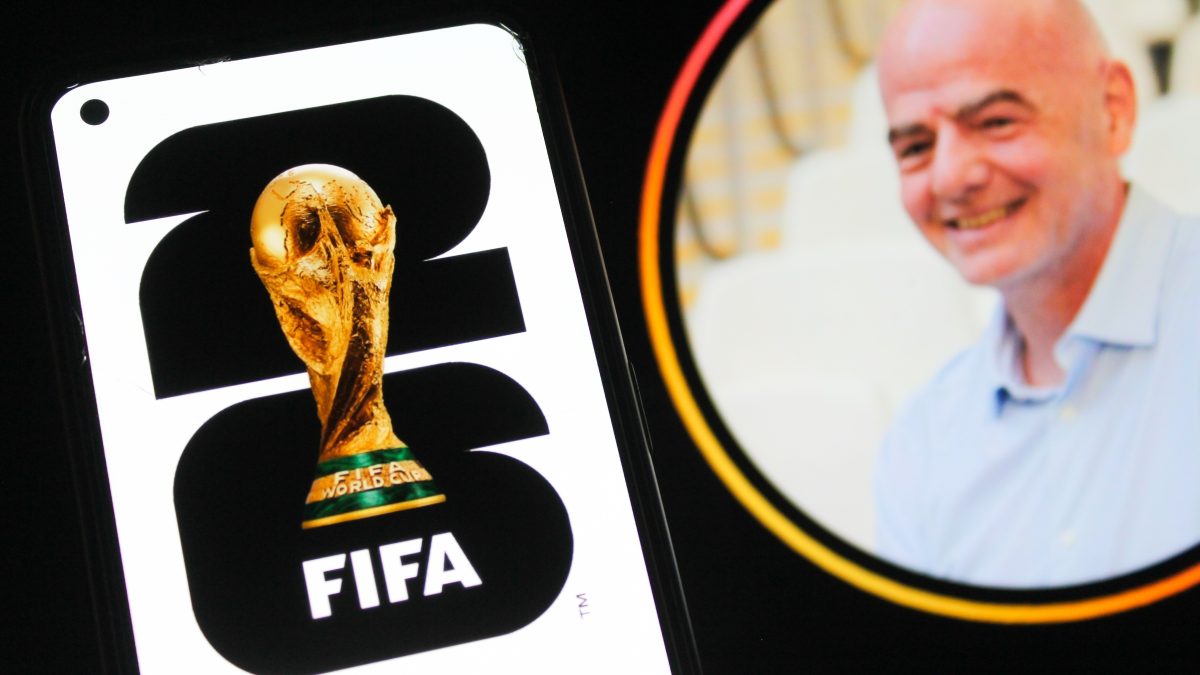
Buried in all this is a new award FIFA plans to unveil. The full title: “FIFA Peace Prize – Football Unites the World,” meant to honor someone who has taken “exceptional and extraordinary actions for peace.” The inaugural winner hasn’t been named, but the betting money is on Donald Trump, who now chairs the Kennedy Center after reshaping its board earlier this year.
A red carpet draw for a record-price World Cup
FIFA’s press release describes the night as an “extraordinary selection” of cross-sport icons and a “remarkable crossover of global sporting greats.” Brady shows up as a seven-time Super Bowl winner and minority owner of Birmingham City. Gretzky is still “The Great One”—hockey’s all-time points leader, four Stanley Cups. Shaq is a four-time NBA champion who’s become a global entertainment brand. Judge captains the Yankees and puts a local face on a final that will be played across the river at MetLife Stadium.
But notice who’s missing. Mexico—the country hosting the opening match at the Azteca—doesn’t have a comparable legend anywhere near the stage. Canada’s representation leans entirely on Gretzky, even as photos of him golfing with Trump in Florida keep bouncing around back home. For a World Cup sold as three countries sharing the spotlight, the casting in Washington makes it feel like America’s party with two plus-ones.
Trump controls the Kennedy Center now. FIFA booked the building for weeks, bumped the regular programming, and built a red carpet night most fans will only ever see through a broadcast. The optics write themselves: World Cup meets campaign rally.
This lands in a year when fans are already crunching numbers on what it’ll cost to get inside a stadium. FIFA’s initial range runs from $60 for the cheapest group-stage seats to $6,730 face value for the final—with dynamic pricing stacked on top. Parking at some U.S. venues is sitting in the $75 to $175 range per game. Hospitality at MetLife? Try $70,000 a head.
We’ve already covered FIFA’s dynamic pricing coming to 2026 and how algorithms will tilt access toward people who treat match tickets like a stock portfolio. The math isn’t complicated. When the baseline runs into thousands of dollars just to walk through the gate, the World Cup stops feeling like a global festival and starts looking like a VIP product with some football attached.
There’s also a political current running beneath all of it. Trump has used past World Cup announcements from the Oval Office to talk more about security and control than welcoming visitors. His tight relationship with FIFA president Gianni Infantino—and the strong likelihood that the first peace prize goes to a sitting president on his own stage—only sharpens the sense that this tournament is walking a political tightrope as much as a touchline.
That cocktail of spectacle, anxiety, and power echoes themes we traced in How the 1994 World Cup became part of America’s culture wars, when another U.S. World Cup turned into a referendum on who the tournament was really for.
Strip away the confetti and concert lights, and draw night still matters. Forty-eight teams getting sorted into twelve groups. The bracket path can tilt a tournament before a ball is kicked. Our 2026 World Cup draw explained guide breaks down the pots, restrictions, and what the new round of 32 actually looks like. For Mexico, Canada, and the United States, the draw determines whether they’re crisscrossing a continent in summer heat or staying relatively anchored in one region.
Years from now, nobody will remember every celebrity who walked the Kennedy Center carpet. They’ll remember how fair or brutal the groups felt and what it actually cost to be in the stands. But right now, the signal from Washington couldn’t be clearer: this is a World Cup that wants to be bigger, richer, and more American than any before it.
For fans watching on couches and phones, the real question cuts through the VIP theater: when this World Cup finally arrives next summer, will it still feel like their tournament—or somebody else’s private party?
