

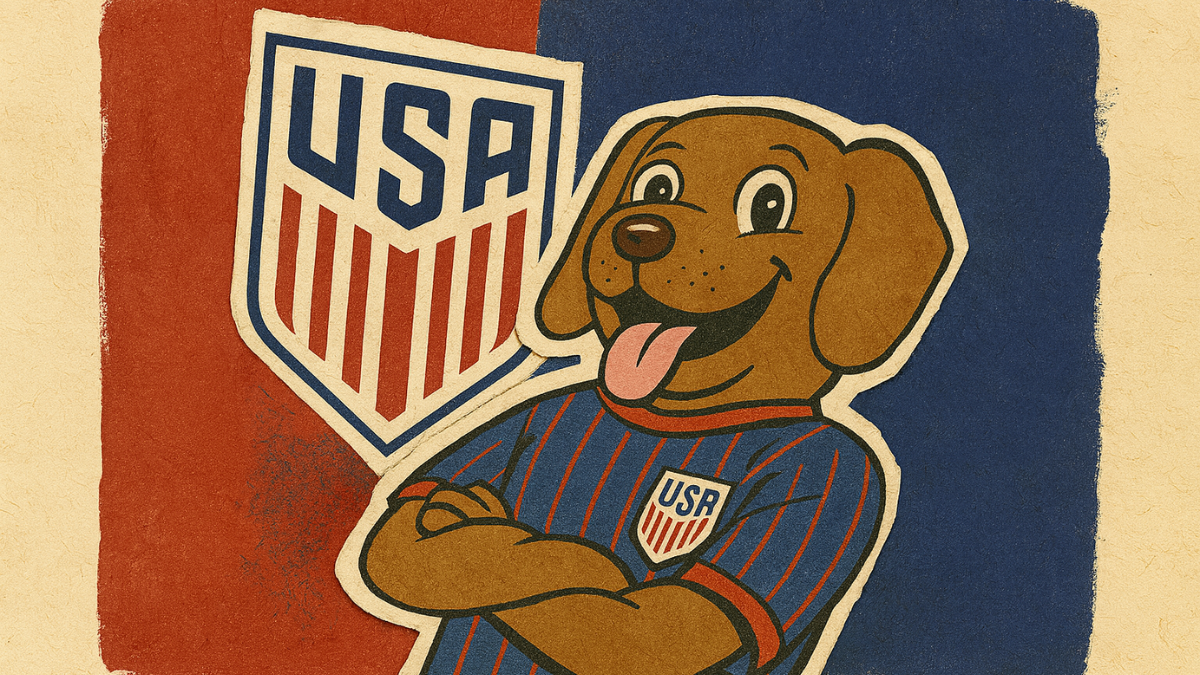
U.S. Soccer quietly added a new face to the program ahead of the 2026 World Cup draw in Washington, D.C. Not a rising dual national. Not a tactical mastermind. A broad-headed, tongue-out Chesapeake Bay retriever in a No. 27 shirt—already being shared, memed, and judged across the country.
On the surface, a simple mascot reveal. The federation trotted out a friendly dog to greet kids, pose for photos, and roam sidelines at events. But the decision says more than it appears about how U.S. Soccer wants to present itself during the most important stretch since 1994.
The federation claims the design draws from the Chesapeake Bay retriever’s “bright and happy disposition, courage, willingness to work, and intelligence.” The shirt number isn’t random either—it represents the 27 national teams under the U.S. Soccer umbrella, from senior sides to youth and extended programs. No name yet. Fans can pick one by joining the Insiders program and voting through the official app.
That rollout alone tells you the federation is trying to do two things at once. It wants a light, approachable symbol that feels unquestionably American. It’s also using the launch to grow its direct-to-fan database before the first ball is kicked in 2026.
A branding shift hiding in plain sight
Choosing a Chesapeake Bay retriever isn’t just a cute dog play. The breed traces back to the Mid-Atlantic, which fits neatly with the World Cup draw in Washington and the cluster of East Coast host cities. It’s a working dog known for charging into cold water, holding its line in rough conditions, doing unglamorous jobs for hunters and rescuers. In a sport where national teams get treated as extensions of national character, U.S. Soccer is leaning into a blue-collar, resilient image rather than something sleek and futuristic.
It also reconnects the federation with a moment that still matters. The United States last hosted a men’s World Cup in 1994, when Striker—another dog—served as the tournament’s cartoon guide. For a generation of American fans who grew up on that summer, this retriever feels like a subtle echo rather than a clean break. A future piece on how 1994 World Cup marketing changed the sport in this country almost writes itself.
At federation headquarters, there’s an obvious calculation. Recent years brought legal battles over equal pay, federation leadership turnover, and persistent questions about the direction of both senior national teams. A mascot can’t fix any of that. But it can become a non-controversial focal point in photos, school visits, and soft marketing around a tournament that will face intense scrutiny from day one.
For U.S. Soccer’s digital team, sign-ups probably matter more than likes right now. Making the naming vote an Insiders-only process turns a fun decision into an incentive to download the app, share an email address, and plug into a pipeline of ticket offers and content. Ahead of a home World Cup, building that direct audience is as strategic as anything happening in the draw itself.
There’s also a clear content play coming. Training ground videos of Christian Pulisic or Weston McKennie meeting the mascot for the first time. Sophia Smith trying to teach it a trick between sessions. Quick, shareable clips of stars in relaxed moments are already a staple of modern football coverage. This dog just gives U.S. Soccer a ready-made partner for that style of storytelling.
Long-term, the retriever will live in a crowded visual landscape. FIFA will unveil its own global mascot, sponsors will push their characters, and Mexico and Canada will likely introduce national versions of their own. The United States opted for something familiar and disarming rather than experimental—closer to the mascots that roam NBA and NFL arenas than the abstract figures fronting many international tournaments.
That familiarity might be the point. The home World Cup will touch cities where soccer is fully embedded and markets where it still competes with every other sport on the calendar. A big, goofy dog can cut through that noise with kids and casual fans in ways no tactical graphic or federation statement ever could.
None of this will matter much if the teams don’t perform. By the time the opening match kicks off, attention will swing back to coaching choices, injuries, and the eternal debates about who should start where. Starting lineup predictions will outrun any mascot story.
Still, symbols stick. Twenty years from now, some fans will remember this era through a handful of images: a knockout game on home soil, a star player in full stride, and a Chesapeake Bay retriever with its tongue hanging out on the touchline. For a federation trying to knit together nostalgia, identity, and the sheer scale of a home World Cup, that may be exactly the character it needs.
